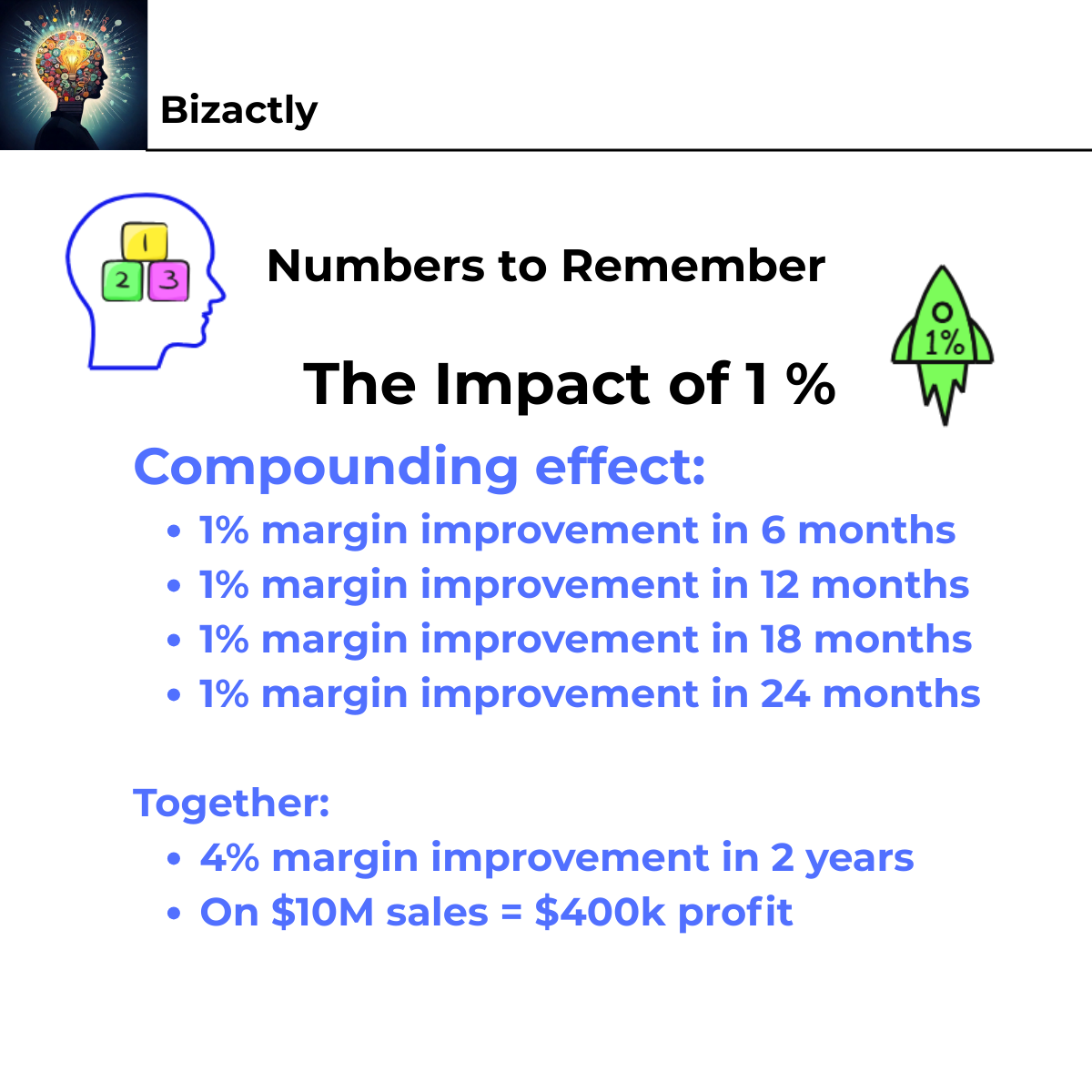
Some ideas based on numbers or ratios are valuable and worth remembering.
One of these is the "Impact of one percent".
💡 A 1% improvement in margin can make a significant impact.
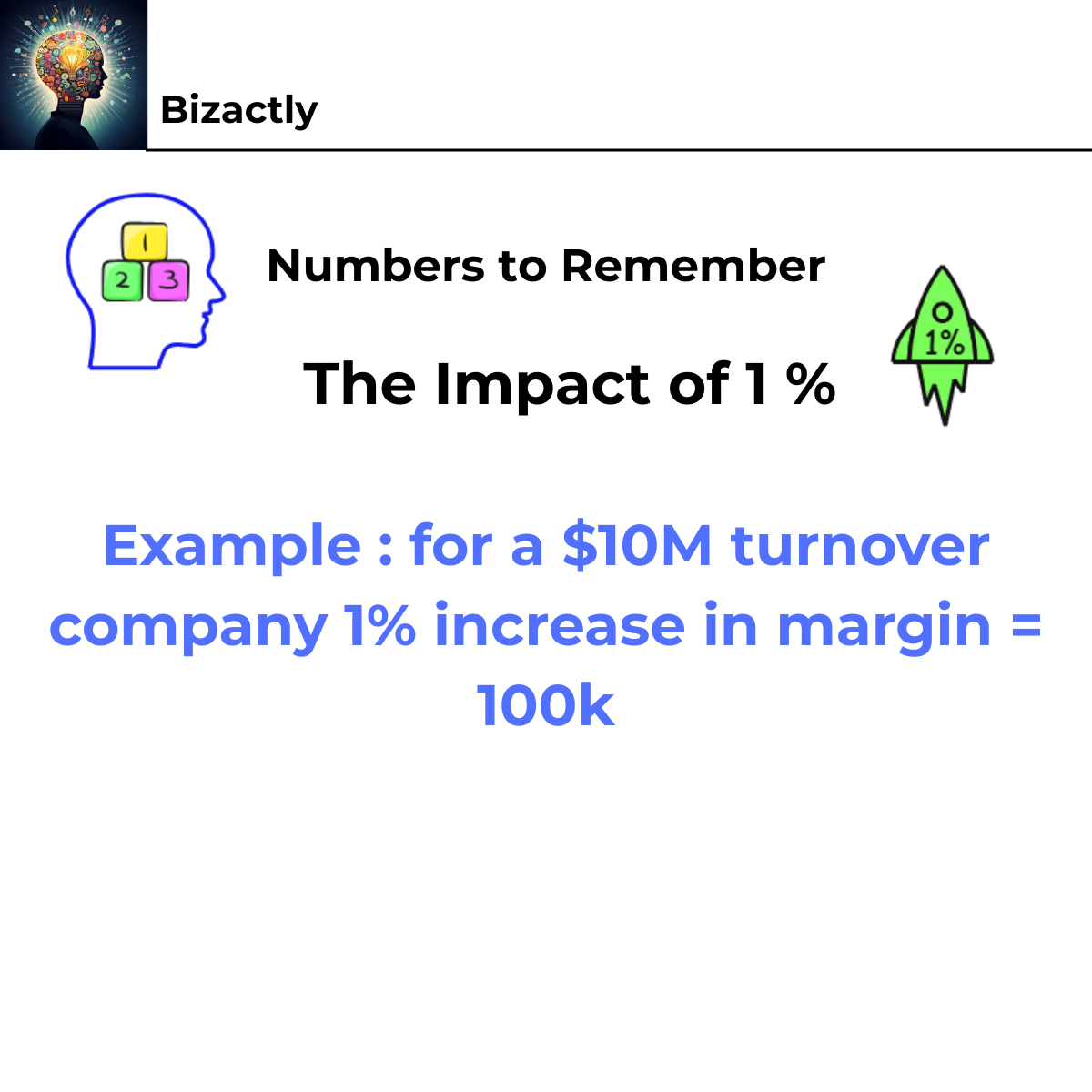
🏢 For a $10M turnover company, a 1% improvement in margin = $100k increase in profit. 💰
🧠 Why 1% Really Matters
🔍 A 1% improvement rarely feels exciting on its own — but businesses don’t improve in isolation.
⚙️ Improvements happen across pricing, costs, productivity, waste, capital use, and time.
🧱 Each 1% stacks on top of the others.
🦾 Think of 1% as a lever, not a rounding error.
💵 1️⃣ Pricing Power
🏷️ Increase average selling prices by 1%.
📊 Sales rise from $10.00M → $10.10M.
🧊 Costs stay largely fixed in the short term.
✅ Result:
➕ 💰 ~$100k extra revenue
⬇️ 🟢 The majority drops straight to profit
🧾 2️⃣ Cost Discipline (Manufacturing / Wholesale)
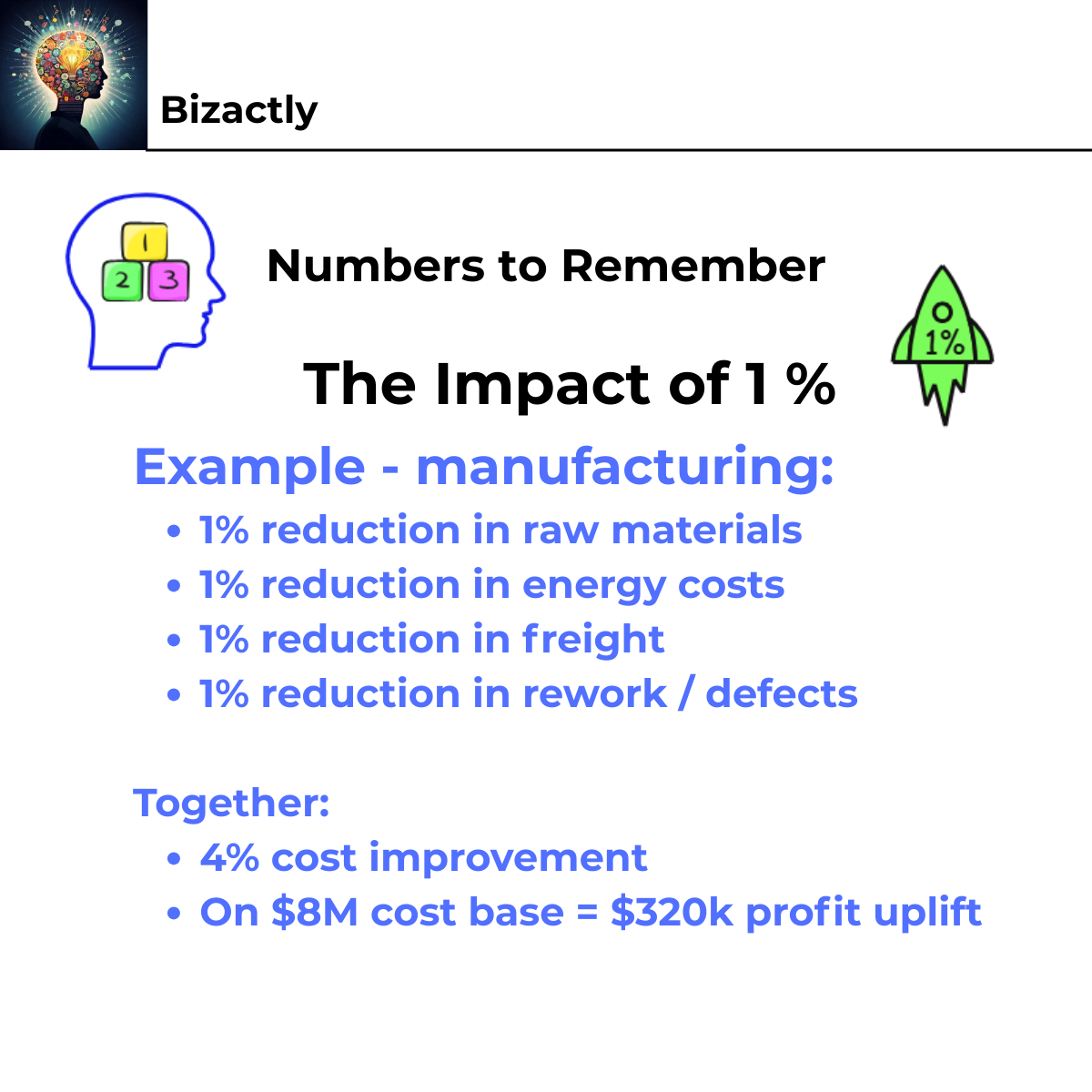
🏭 1% reduction in raw materials 🧱
⚡ 1% reduction in energy costs 🔌
🚚 1% reduction in freight 📦
🛠️ 1% reduction in rework / defects 🔧
🧩 Each looks small — together they add up.
📉 That’s a 4% cost improvement.
💰 On an $8M cost base = $320k profit uplift 🚀
👥 3️⃣ Productivity: Same People, More Output
🏢 Professional services firm – $10M revenue
⏱️ 1% improvement in utilisation 📅
🧹 1% reduction in rework / admin time 🗂️
🤖 1% improvement in workflow automation ⚙️
📈 That’s 3% more billable output with:
🚫 No new hires 👤
🚫 No new offices 🏢
🚫 No new systems 💻
✅ Result:
💵 ~$300k revenue uplift
🟢 Minimal marginal cost
🌀 4️⃣ Compounding Over Time (the killer insight)
❌ A common mistake: “2% per year isn’t worth the effort.” 🤷
✅ Reality:
📌 Year 1: +2%
📌 Year 2: +2% on a higher base
📌 Year 3: +2% again
📈 After 3 years: ~6.1% cumulative improvement
💰 On a $10M turnover business → ~$610k uplift 🚀
🏁 Conclusion
😴 1% improvements can feel boring.
🔥 Compounded across the business and over time, they are anything but.