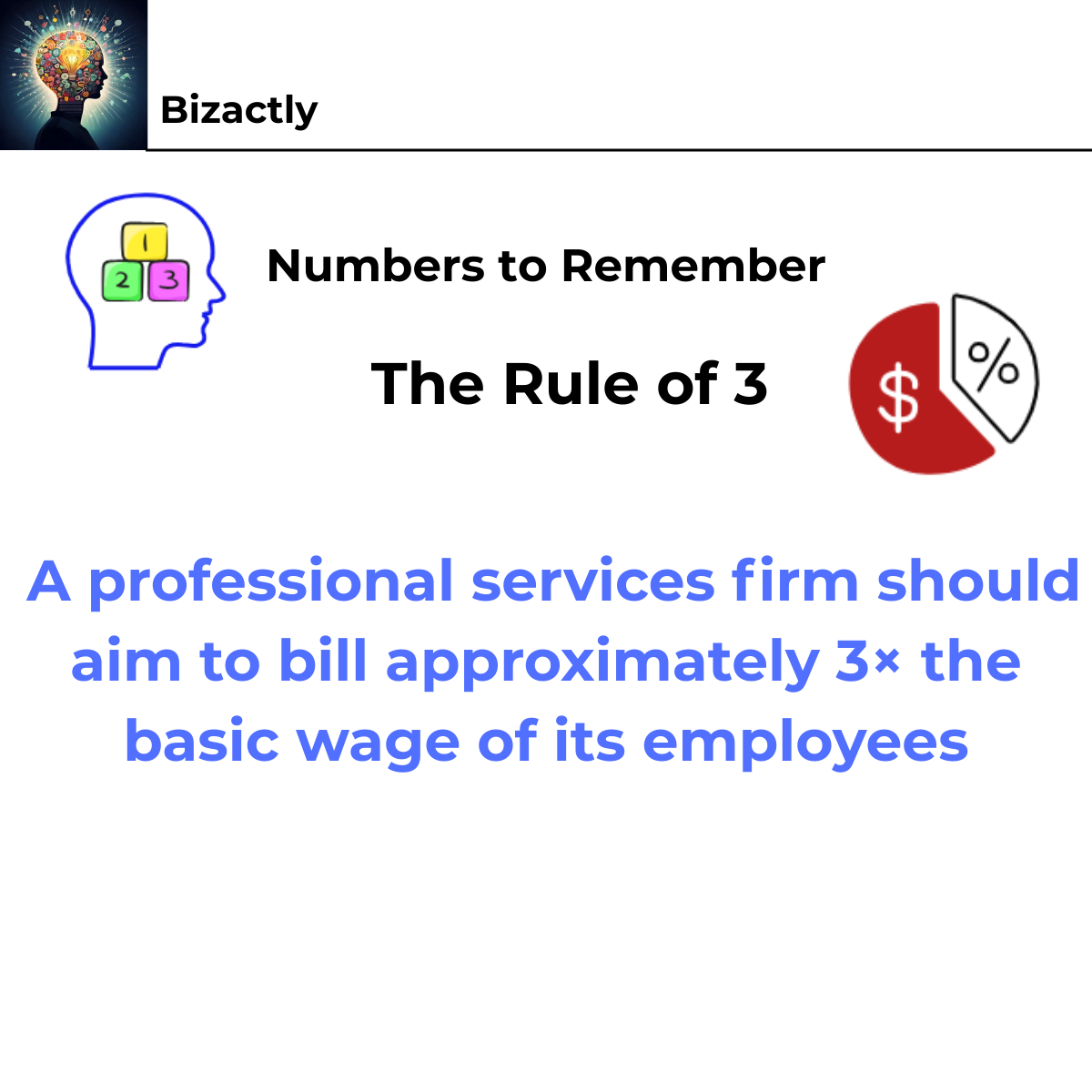
Some ideas based on numbers or ratios are valuable and worth remembering.
One of these is the "The Rule of Three".
👔 The Rule of 3 is a simple but powerful pricing and performance guideline used in professional services—lawyers ⚖️, engineers 🏗️, architects 📐, accountants 📊, consultants 💼 and other advisory firms.
💡 The idea is straightforward:
➡️ Aim to bill around 3× the employee’s basic wage.
✅ This gives you a quick way to set targets, measure performance, and maintain profitability without needing complex models.
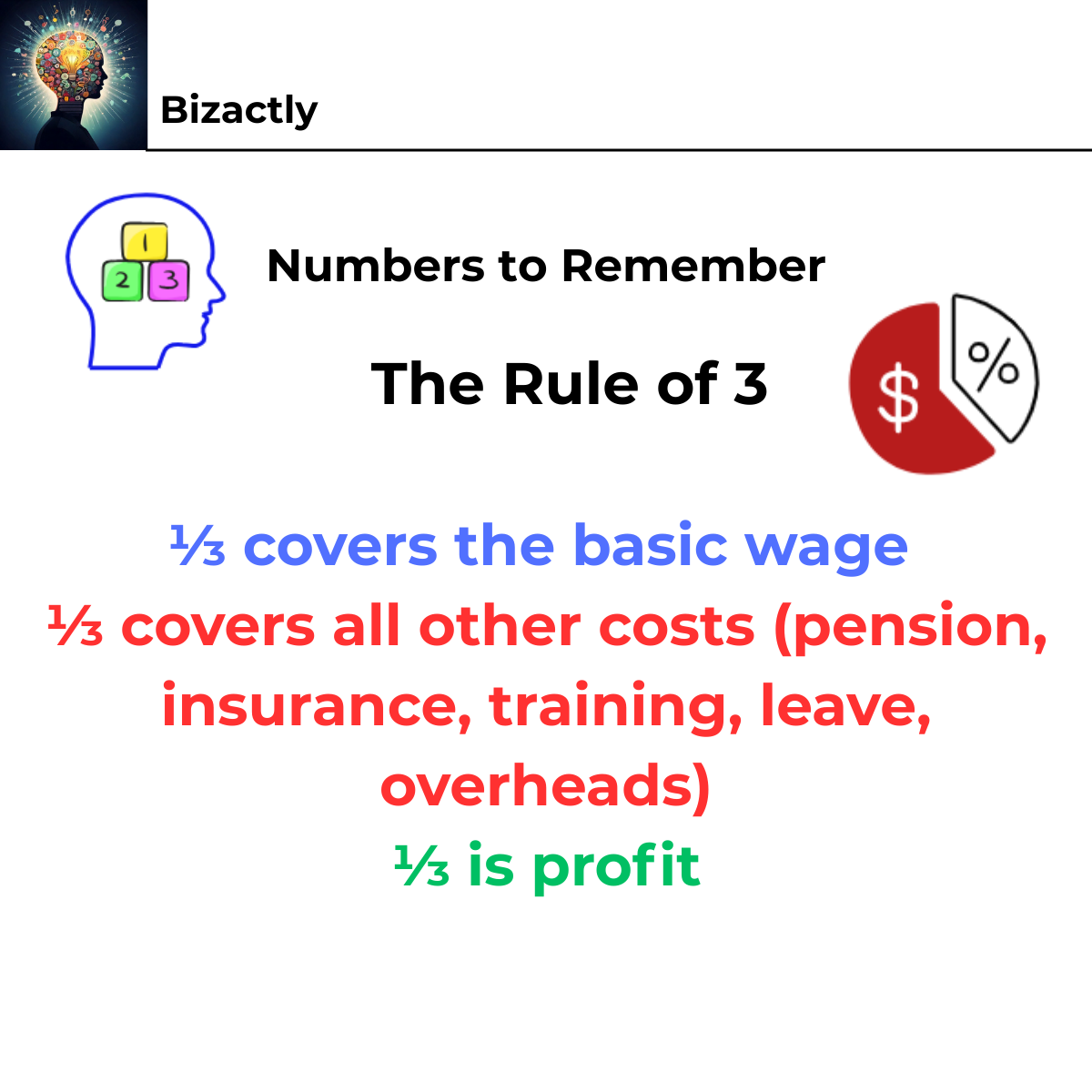
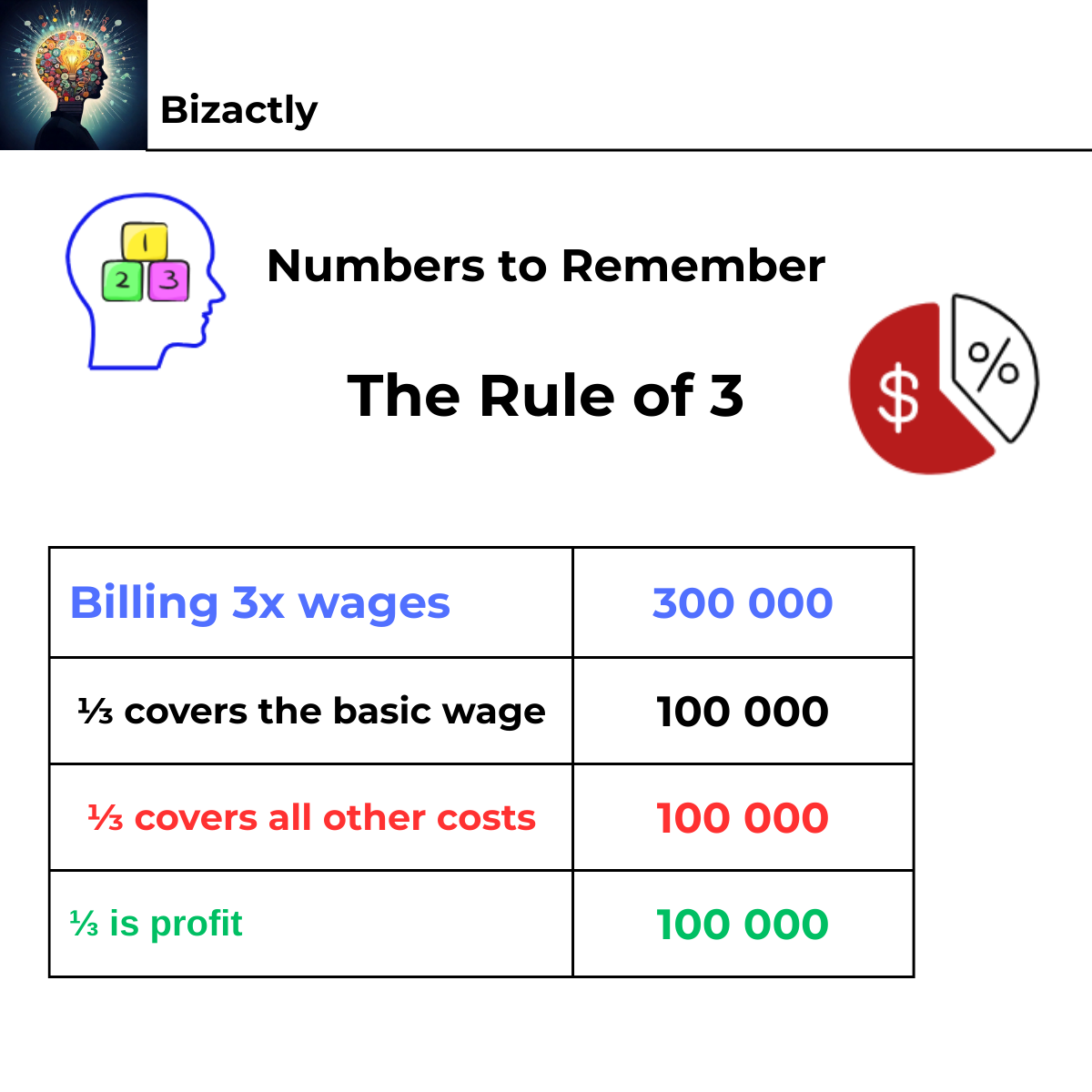
Think of every dollar billed as being split into three equal buckets 🪣🪣🪣:
1️⃣ One-third = Wages 💵
👷 This covers the employee’s direct salary or base wage. It’s the most visible cost—but not the full cost of employing someone.
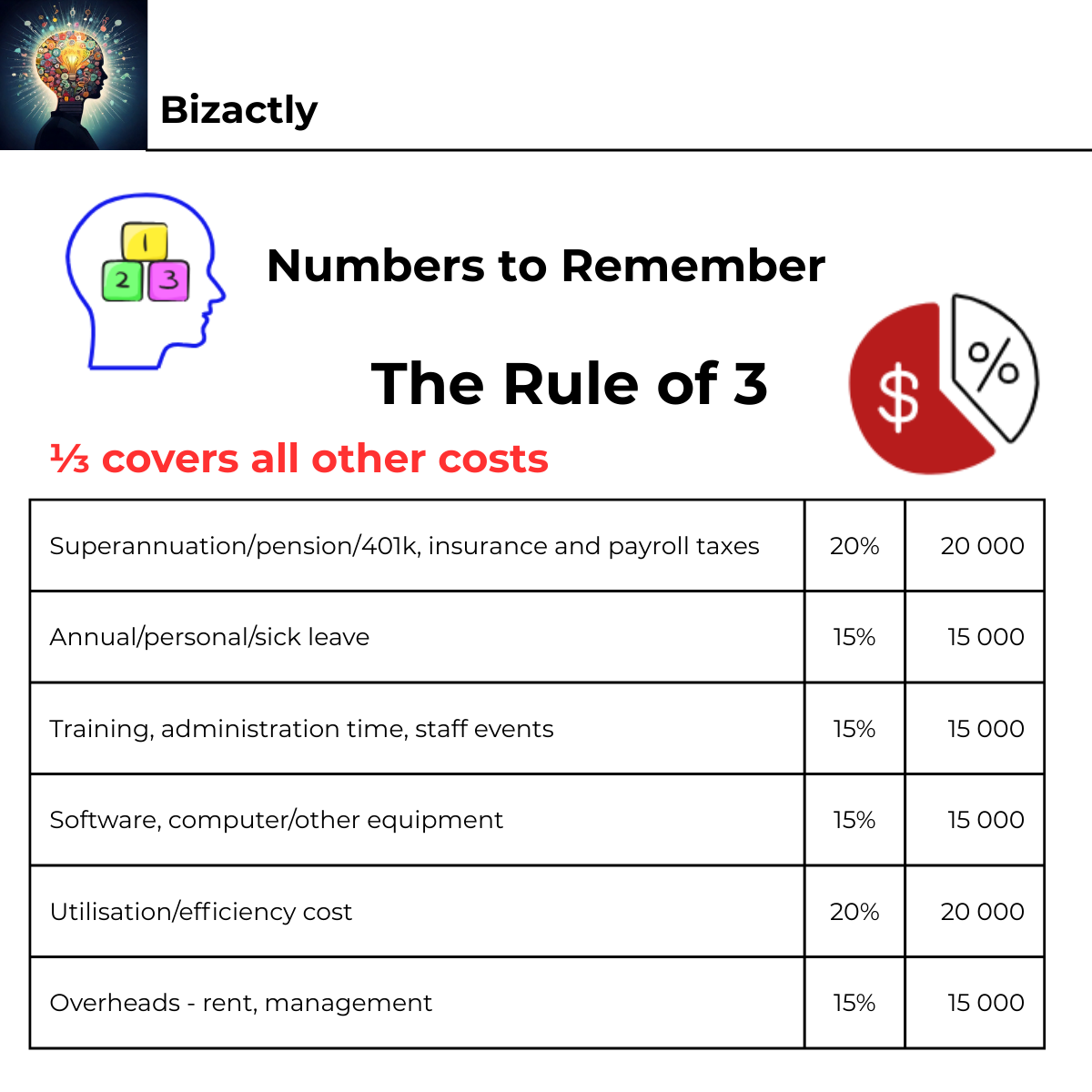
2️⃣ One-third = On-costs & Overheads 🏢
📦 This bucket covers the costs that sit around the employee, such as:
🧾 Superannuation / pension contributions
🏥 Medical insurance and benefits
💳 Payroll taxes and statutory costs
🌴 Leave (annual, sick, parental)
🎓 Training and professional development
💻 Software, systems, IT, admin support
🏢 Office rent, utilities, equipment
📣 Marketing and business development support
🧠 In professional services, this “hidden” bucket is often as large as wages.
3️⃣ One-third = Profit 📈
🏆 This is the return to owners/partners and the fuel for growth. It helps the business:
🚀 Reinvest and expand
🛡️ Handle risk and downturns
🏗️ Improve systems and capability
💰 Build long-term value
✅ 1) Simple pricing benchmark 🧮
Instead of guessing billable rates, the Rule of 3 gives a quick reality check: if pricing and utilisation can’t hit ~3× wages, profitability will be hard to sustain.
✅ 2) Clear performance targets 🎯
It helps set measurable goals per employee (or per team), and highlights whether issues come from:
💲 Pricing too low
⏱️ Utilisation too low
🏢 Overheads too high
🧾 On-cost assumptions underestimated
✅ 3) Supports sustainable growth 🌱
Firms that ignore this rule often end up with:
😓 Underpricing and overwork
💸 Weak cash flow
📉 Revenue growth without profit growth
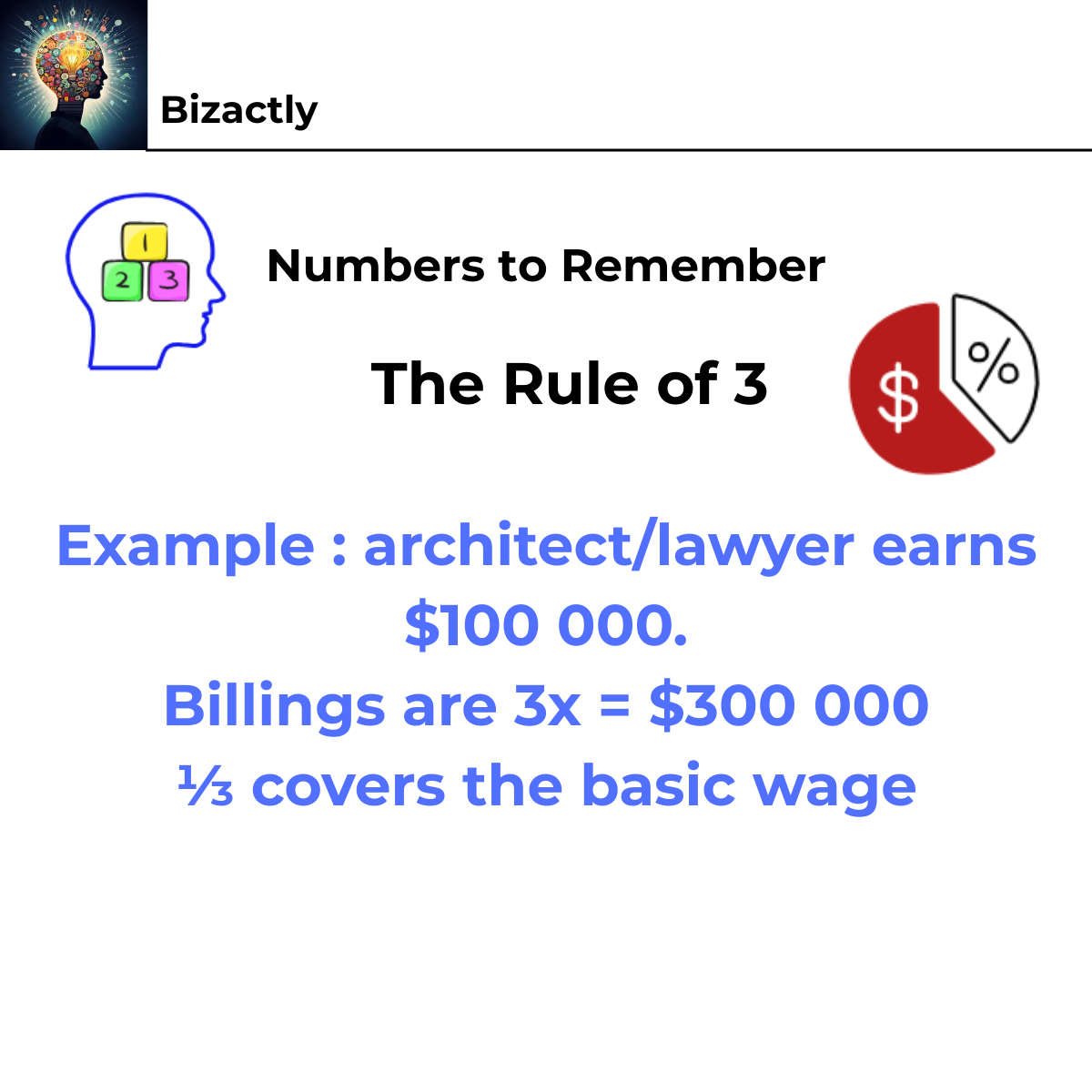
👷 Suppose a senior engineer earns $100,000 in base wages.
📌 Rule of 3 target revenue ≈ $300,000 per year 💰
🪙 Split:
💵 $100k → wages
🏢 $100k → superannuation/pension/401k, tax, leave, training, inefficiencies, overheads
📈 $100k → profit
✅ It is: a practical rule-of-thumb 🧠 for planning, pricing, and diagnosis.
❌ It isn’t: a strict accounting rule or a substitute for detailed budgeting.
📌 Some high-value advisory firms might exceed 3× wages 🚀, while very competitive or early-stage practices might sit below it temporarily 🧱.
📌 The Rule of 3 is a simple framework that builds financial discipline:
➡️ Bill 3× wages.
1️⃣ One-third pays people 💵
2️⃣ One-third supports the business 🏢
3️⃣ One-third rewards ownership 📈
✅ Used consistently, it helps professional services firms set realistic targets, measure performance clearly, and achieve sustainable profitability 🌟.