Some ideas based on numbers or ratios are valuable and worth remembering.
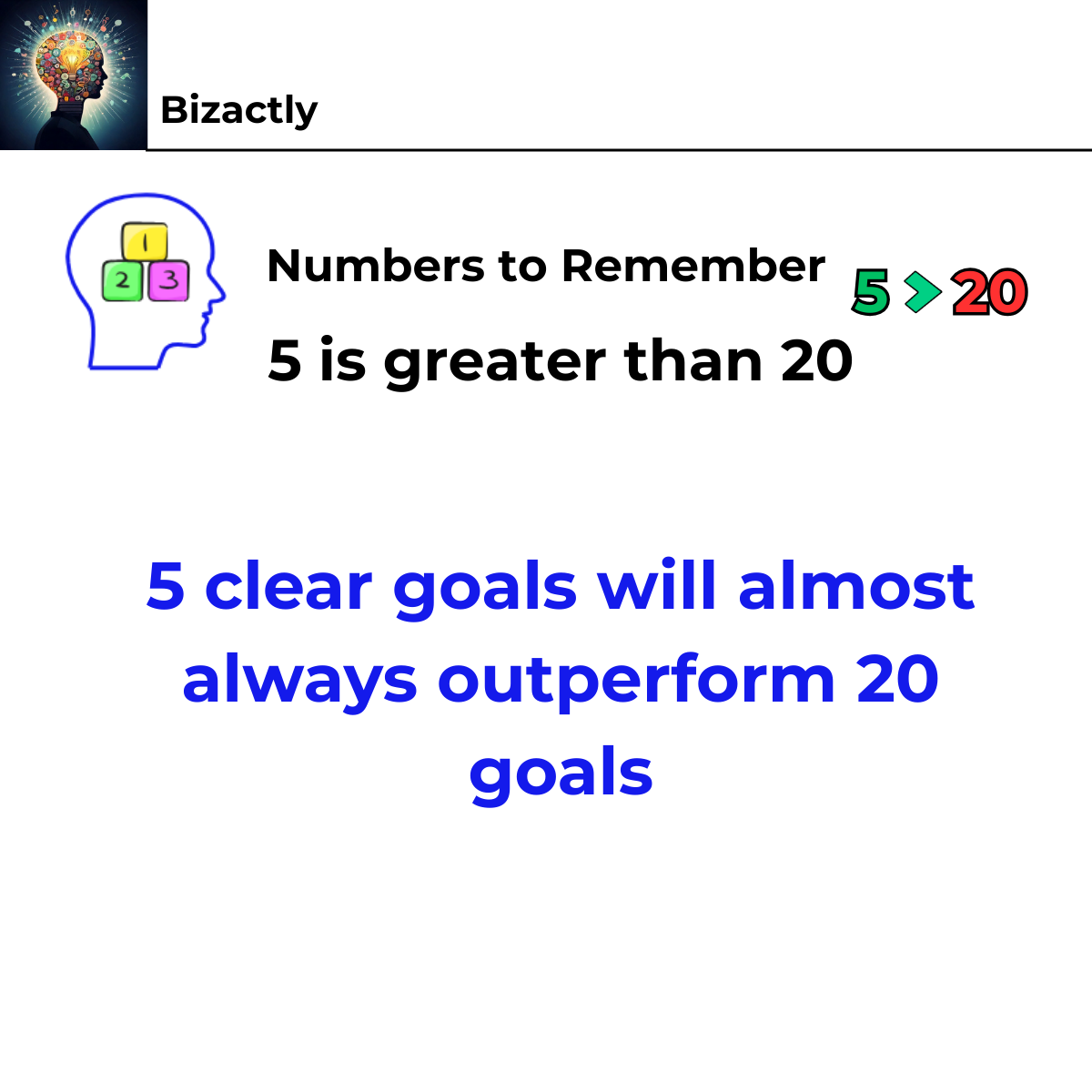
One of these is the "Five is Greater than Twenty".
📌 In business, more goals feel ambitious.
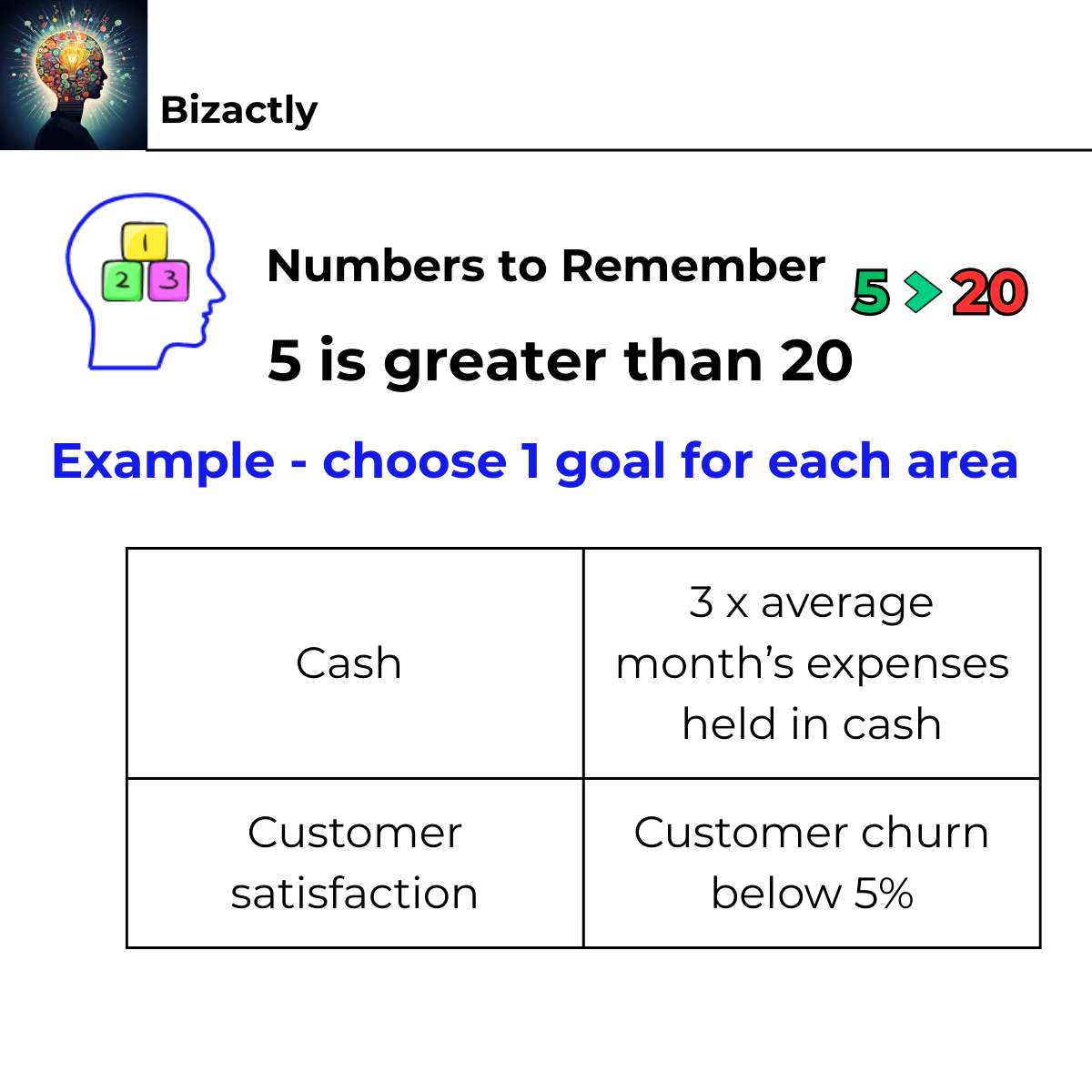
🤯 But in reality, 5 is greater than 20.
✅ When it comes to goals and KPIs, five clear priorities almost always outperform twenty competing ones.
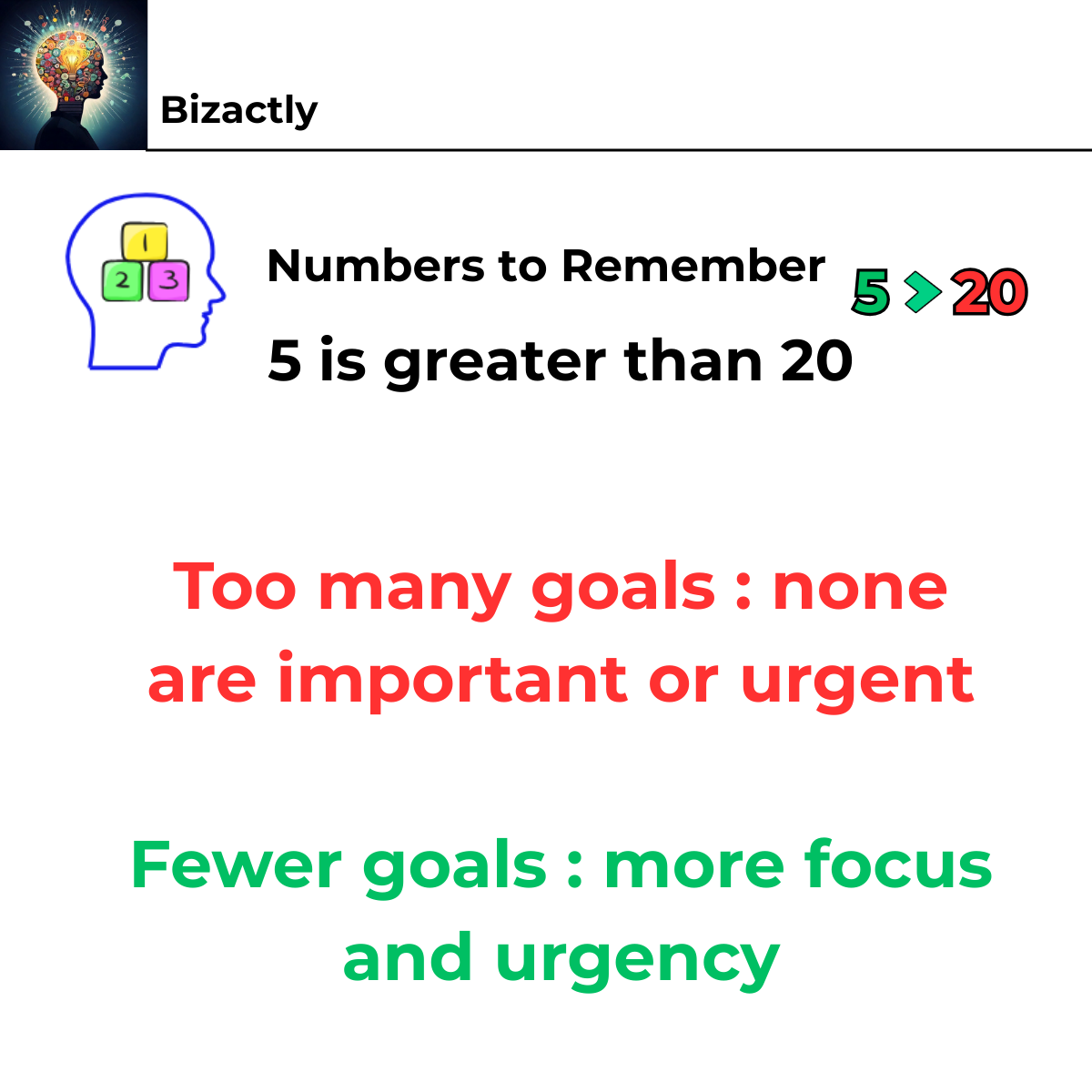
🎯 A business should focus on no more than five meaningful goals or KPIs at any one time.
⚠️ Once you go beyond five, attention fragments, accountability weakens, execution slows, and dashboards turn into noise.
🧠 This isn’t about simplicity for its own sake — it’s about how focus and execution actually work.
1️⃣ Attention is limited — leadership focus is a finite resource.
🔍 20 goals → shallow attention everywhere
🎯 5 goals → deep attention where it matters
2️⃣ KPIs demand action — a KPI is a call to decide and act.
📉 20 KPIs → none feel urgent
📈 5 KPIs → each one triggers decisions
3️⃣ Accountability breaks after five — ownership becomes blurry when there are too many priorities.
👤 With five priorities, each one has an owner, a rhythm, and visible wins/misses.
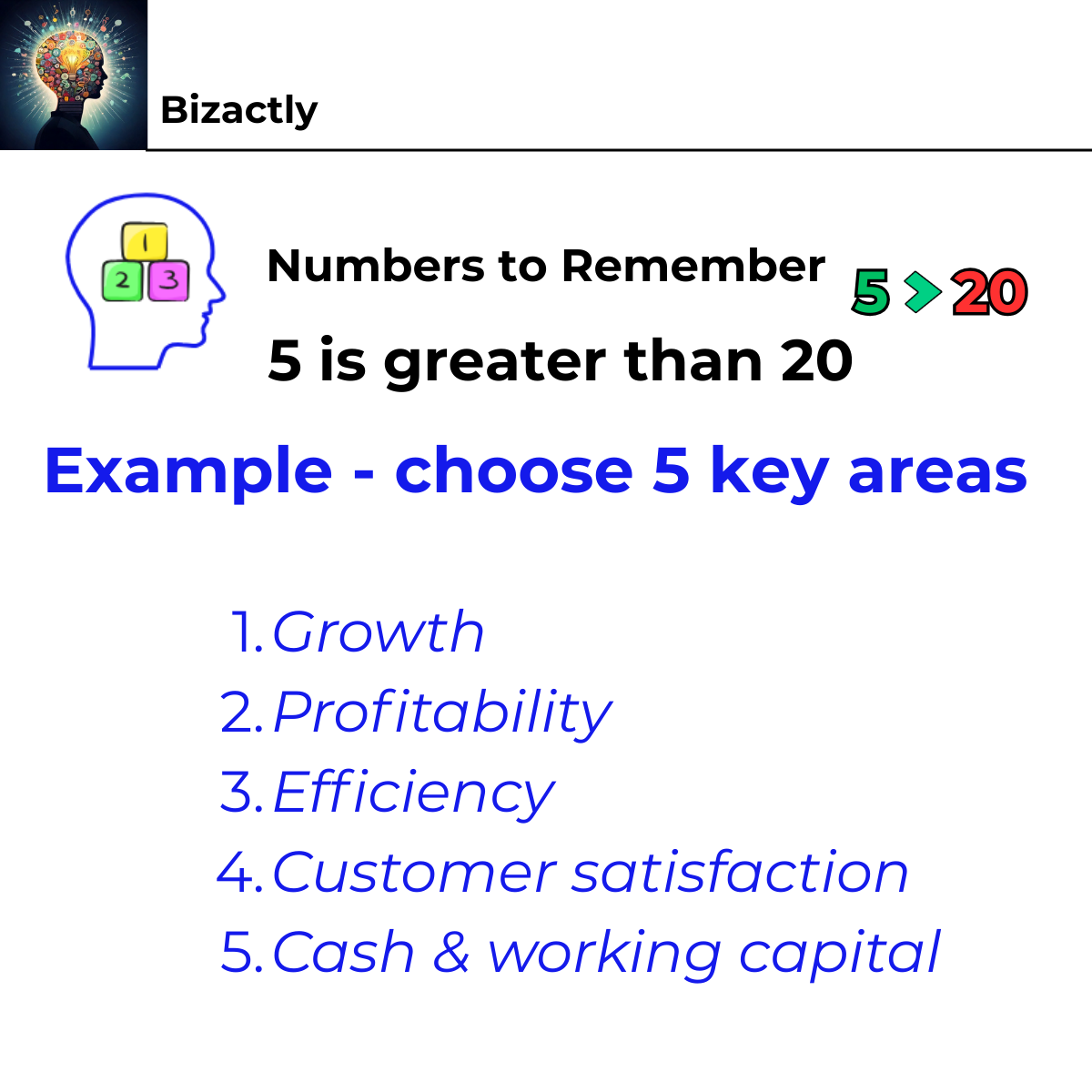
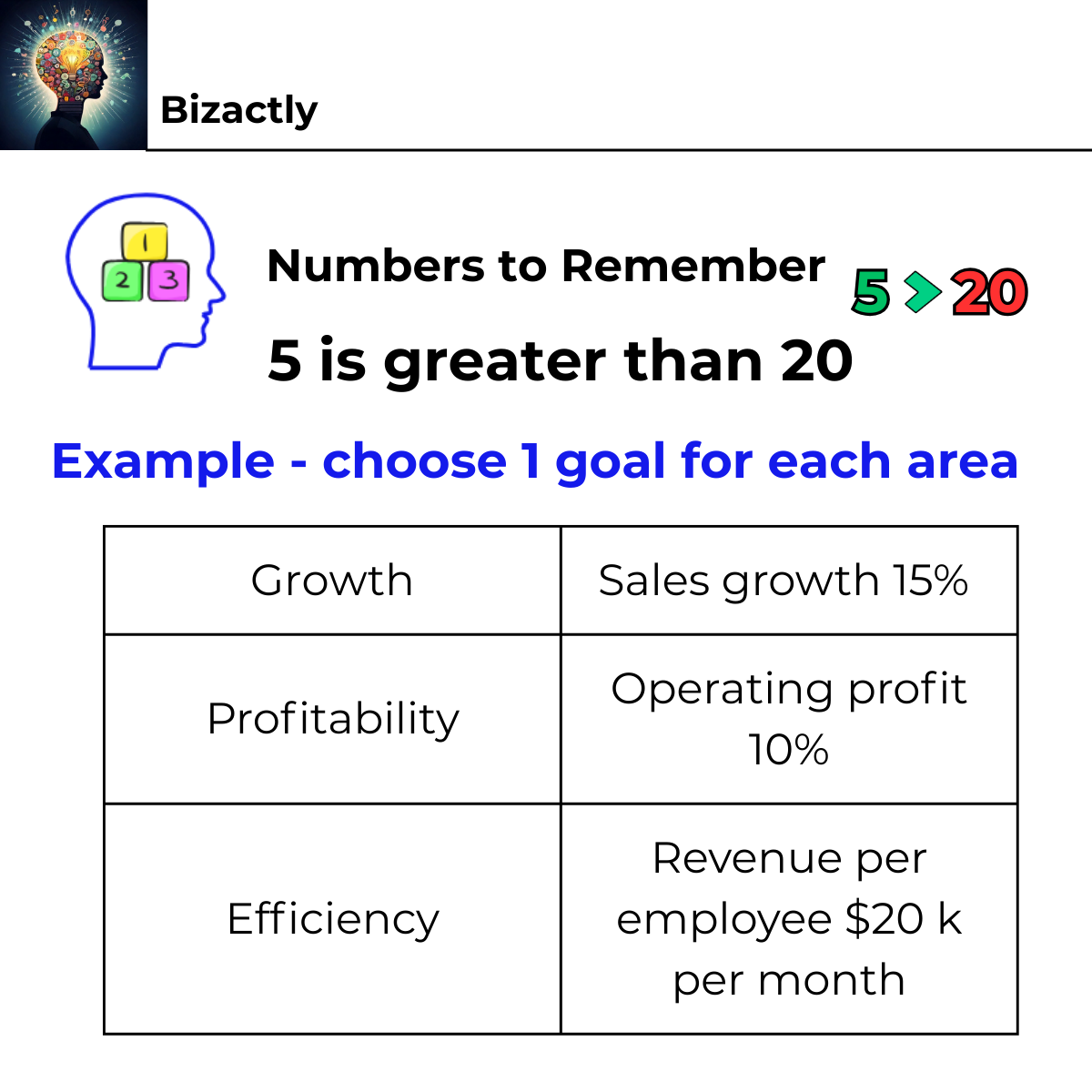
🧩 A simple way to apply this principle is to choose one KPI from each critical area:
💰 1. Profitability — Are we making money properly?
• Gross margin %
• Net profit margin %
💧 2. Cash & Liquidity — Can we fund operations and growth?
• Cash runway (months)
• Operating cash flow
📈 3. Growth — Is the business expanding?
• Revenue growth %
• New customers
⚙️ 4. Efficiency — Are resources used well?
• Revenue per employee
• Inventory turns
❤️ 5. Customer Health — Will revenue sustain?
• Churn %
• Repeat purchase rate
✅ These five numbers explain most of what matters in the business.
✅ Good goals are specific
🚀 Improve gross margin by 2%
💧 Extend cash runway from 6 to 9 months
❤️ Reduce churn by 1%
📦 Launch one new product
📣 Build one scalable acquisition channel
❌ Weak goals are vague
😵 “Improve marketing”
🔧 “Optimise operations”
🌍 “Grow internationally”
🖥️ “Improve systems”
🎓 “Upskill staff”
🧨 Why they fail: vague goals don't have measurables and clear outcomes.
🧱 Each priority should have:
✅ 1 goal
✅ 1 primary KPI
✅ 1 owner
✅ 1 review cadence
📌 Example
💰 Improve profitability → Gross margin % → Monthly
⚙️ Improve efficiency → Revenue per employee → Quarterly
❤️ Retain customers → Churn % → Monthly
❌ Tracking everything because you can → dashboards become data museums.
❌ Only using lag indicators → you react too late.
✅ A strong 5 > 20 mix usually includes: 2 lag KPIs + 3 lead KPIs.
✅ Forces trade-offs
✅ Sharpens focus
✅ Speeds execution
✅ Turns strategy into behaviour
🏁 In business, clarity beats complexity. And for goals and KPIs:
🔥 5 > 20
❓ If we had to delete 80% of our KPIs today, which five would we keep?
❓ Do our “top KPIs” actually change decisions, or are they just nice-to-know reporting?
❓ Can every leader name our five most important numbers without opening a dashboard?
❓ For each KPI, who is the owner — and what action happens if it moves the wrong way?
❓ Are we mixing lead and lag indicators, or are we only measuring results after it’s too late?
❓ Are we pretending to have five goals, but really running twenty projects underneath them?
❓ What would we stop doing this quarter to improve focus on the five?